


Rebellion in China!

THERE is a rebellion brewing in China. No guns, weapons and armaments of war. No actual fighting and skirmishes, and no blood flowing in the streets. There are no leadership structures; no single spokesperson articulating their demands, hopes and aspirations. There are no written manifestos and demands made on government. The rebels are China's youth.
Chinese youth is simply giving up. Their rebellion is unique as it started as gimmickry in social media, an online fad. They even have a name for it — bai lan, or let it rot! It is perceived principally as a rebellion directed at the Chinese Communist Party's (CPP) governance. It has disturbed and worried the CPP that President Xi Jinping had to make a direct and personal appeal to the youth reminding them that they are the hope of the fatherland. And the CPP came out with palliative policies that proved to be just that — ineffective.
But bai lan is basically the youth saying "no" to the system. On a personal level, they are saying, "I will not cooperate. I don't like to try my best. My personal interest and happiness come first." The rest — let it rot — bai lan!
From Mao to Deng
The antecedent is decades in the making, going back to post-World War 2 China: its founder Mao Zedong and his insane idea of catching up with the developed world. He and the CPP fashioned an elaborate tool to forcibly exploit the agricultural and industrial sectors to catapult China to economic growth from 1958 to 1962 with the touted Great Leap Forward. Instead, this resulted in the bankrupting of China, mass starvation and famine. This was followed by his Great Proletarian Cultural Revolution, from 1966-1976, a 10-year campaign to re-instill revolutionary fervor in the younger generation, purging the CPP of bourgeois elements and capitalist leanings. The rural areas suffered the brunt of this debacle.
Not until the demise of Mao and the emergence of Deng Xiaoping in 1978 did China institute the open-door policy allowing FDIs and launched a series of market reforms transforming China from an isolated impoverished state to what is currently the world's second biggest economy. From 1978 to 2013, the economy grew by an astounding annual rate of 9.5 percent. During these salad days, Deng let loose the Chinese entrepreneurial drive that would later compete with the world's number one — America.
These reforms saw millions of its citizens lifted from poverty and elevated to middle-class status. China became the globe's manufacturing hub. Within the context of a socialist system, an injection of capitalist principles, anathema to Mao's original precepts, China opened to the world and its economy exploded. Deng Xiaoping on the use of capitalist principles within a socialist universe was encapsulated in his quote: "No matter if it is a white cat or a black cat; as long as it can catch mice, it is a good cat."
Around this time too was the start of the great migration of the youth from the rural areas to the cities in search of good education, higher-paying jobs, and better living conditions, concentrating on the megalopolises of Shanghai, in the eastern coast; Beijing, in the northeastern part; Guangzhou, in southern China; Shenzhen, another port city; and Chongqing in Central China on the Yangtze River, among others.
Policies that backfired
Before the start of China's economic resurgence in 1979, faced with an exploding population — a poor country with 400 million annual births — the CPP instituted drastic measures which could now be seen as a knee-jerk reaction. The One Child Policy in 1980 distorted on a massive scale China's demographics resulting in the population getting older and less productive while birth rates have dangerously plummeted. The average replacement of less than 2.1 kids per family was untenable. "Elders who witness China's exponential growth expect children to continue their high expectation to get good education, high paying jobs and continue building a better life for family and country."
This policy ran counter to the cultural predisposition — Chinese parents preferred boys, thus a mismatch in male to female ensued, producing 70 more men than women. Culturally too, the Chinese dream has always been burdened by the three mountains — education, health care and housing. The third component is critical for making a man more suitable for marriage. Chinese demographics distorted all these.
Real estate prices, a substantial component of marriage desirability, skyrocketed, going beyond individuals' salaries, making it impossible for the youth to buy in. The past years saw a Chinese real estate bubble. Behemoth developer Evergrande Group, the poster child for China's economic calamities, went on a debt frenzy, building more apartments and using unfinished properties as collateral for yet more debt and more empty apartments — in a Ponzi scheme that is just about to fall on itself.
As the situation deteriorated, the CPP didn't do substantially anything to salvage the economy. Chinese youths couldn't get good high-paying jobs and couldn't' afford real estate. A pall of uncertainty has descended. Even among the highly educated youth, where additional income is earned through private online tutoring — the CPP crackdowns in August of 2021 eliminated 3 million tutoring jobs creating a black market in tutoring. These tutoring job options for highly educated graduates benefit wealthy families, giving their children a leg up in Chinese society, pricing out the poor.
Lockdowns, zero Covid protocols
Then the second phase of Covid hits. The CPP instituted a zero-Covid policy. In 2020, when Wuhan occurred, China did well, ahead of the curve in lockdowns and virus-spread mitigations, incurring only less than 150,000 deaths (China's figures are suspect), compared to the US and the world's millions. But 2022 was different. The spike in Covid mutation resurgence and CPP's declaration of a utopian zero-Covid protocol with its brutal lockdowns killed businesses and stifled any economic bounce-back. Reportedly, China's slumps since May 2020 in imports/exports contraction cost $45 billion in GDP monthly.
Bai lan inexorably gained traction among the youth. The CPP understood social immobility and lack of opportunities as causes for a despondent attitude of bai lan. Back in August 2021, Xi launched his "common prosperity campaign," purportedly to level the playing field. Its main objective was to narrow the wealth gap between the rich and poor, making China's progress inclusive.
China should have opened its economy more with policies to attract high-tech foreign companies, to absorb China's highly educated youth with high-paying tech labor. Instead of opening the economy further, it did the opposite. It went into a pissing game with the West for an expanded global trade and looked inward into its inequities. Xi Jinping in an attempt to reel in Chinese billionaires, elites and majority of the tax sector, cracked down on big tech and large companies and monopolies; destroyed Jack Ma as an example and humbled billionaires; putting fear in hordes of foreign companies. Overnight millions more jobs disappeared — feeding into the youths' conception of bai lan.
The perfect ingredients now haunt China, particularly its youth; massive 20 percent unemployment; real estate bubble; disparity in the sexes; a bleak future and overall despair.
So, bai lan! Let it rot!
Spillover from 2022: Ukraine and China's continuing gift to the world

THE year 2022 is not done with us yet. It is continuing to spill over and influence the course of events in 2023. I don't see any silver lining. I see only a bleak landscape. But Filipino resilience as always will kick in. We really don't have any choice except to live through what 2023 has to offer. And we will survive! Or at least some of us will. For many of our people hope springs eternal. 2022 and the two previous years saw the double whammy of a catastrophe. The first was the pandemic that killed millions in its wake striking fear among the world's population, locking down their economies. The second is the continuing war in Ukraine exacerbating the lockdowns wreaking havoc on global markets.
Ukraine war
What many pundits predicted to be a short war of a few weeks after the Russian invasion of its neighbor, is now dragging toward its first anniversary on February 24. In my column of March 16, 2022, I said: "Today marks the 20th day of the invasion of Ukraine by Russia. In the coming days Putin will unveil his endgame. Thousands will be dead and those that fled the cities are the lucky ones. Kyiv, Kharkiv, Lviv and Odessa will be reduced to rubble, proverbially comparable to when Tokyo and Japanese cities were firebombed, systematically killing civilians toward the end of World War 2."
I was totally wrong in my forecast! I understated Zelenskyy and the Ukraine people's resolve and overstated Putin's strength. But I was right about one thing:
"America will not shed blood for Ukraine. No 'boots on the ground'! With its NATO allies, the US will simply arm Ukraine, encourage it to resist, and Russian and Ukraine boys will die. Victims all for a surrogate war for democracy. Not a drop of American blood spilled. But this act by America and NATO using Eastern Europeans to butcher each other is pushing Putin into a corner. Putin will not allow Russian boys to die in hordes in a protracted war with Ukraine... America, true to its democratic principles and concepts of freedom, will allow the blood of Ukraine and Russia to flow for the very concepts America holds dear."
Putin has hinted on his nuclear option, but I doubt that he could put this in play, knowing full well the capabilities of the US and NATO allies, their second-strike capabilities and the unthinkable Armageddon that will ensue. But the military strategic doctrine of mutual assured destruction (MAD) is the deterrent. But who knows what madmen will do to survive. Totalitarian regimes in the past have proven to possess an insane mindset and act within these parameters. Putin's saber-rattling is designed to force the West and Ukraine to negotiate. Negotiations will allow Putin to "hold forces in place" giving him a deceptive advantage, having occupied Ukraine's eastern territories as a buffer that Russia could barely hold on to, let alone govern.
But no matter what happens to this war, the US military-industrial-congressional complex (MICC) has already won. To date, America has infused weapons, war equipment, security assistance and training, and financial and humanitarian aid to Ukraine to the tune of $50 billion, presumably insulating the US arms industry from recession. But for the rest of the world, global prices for oil, gas and coal will continue to skyrocket, sending inflation to unprecedented levels and impeding the post-pandemic economic recovery.
Blame the culprit
And in times of great tragedy, the default excuse that gives pseudo-comfort to the afflicted is to put the blame for the pandemic on the culprit, China!
Since the breakout of the virus from an exotic meat market in Wuhan in 2019 and China's efforts to obscure the truth that only an authoritarian government is capable of doing, conspiracy theories have flourished. Foremost of these is the laboratory leakage of a weaponized virus for biological warfare, from the Wuhan Institute of Virology, partly clandestinely financed presumably by some US entity.
From this single incident, the virus spread from China to the world, forcing economic lockdowns. The International Monetary Fund (IMF) estimated the cost to the global economy at a staggering $12.5 trillion. Economists had hopes of some type of recovery by 2023, but the World Bank and other multilaterals have run out of superlatives describing the harm to the world economy, with IMF Managing Director Kristalina Georgieva declaring that supply chain disruptions, inflation and tighter monetary policy were "throwing cold water on the recovery everywhere." All leading economists have different and contradictory views on the world economy. What most agree on is the greater widening gap between the have and have-not countries; and more tragically, the disparity within the countries themselves of their own poor and the rich populace not unlike the Philippines And more importantly, the two biggest world economies that are meant to be the world's main engines of economic growth are mired in their own roles in this pandemic.
Sequel to pandemic
Just recently, from Singapore a new deadly variant of the Covid-19 mutating to Omicron in early 2022 has now metamorphosed further into the Omicron XBB1.5. Reportedly, this is harder to detect, and far deadlier than the Delta variant which has killed millions. China was the last country to get out of lockdown not because they have conquered the pandemic, but the political offshoot was simply too much for Xi Jinping and the Communist Party to accept — the widespread protests erupting in major Chinese cities. Scientists have advanced the idea that China with its zero-Covid policy with its harsh continuing lockdowns, has not achieved herd immunity unlike other countries, particularly those in Northern Europe. Apparently, these countries that lifted lockdowns earlier, and have allowed subsequent milder variance have attained herd immunity. But other world scientists have other theories, unsure about how to fight the closing days of the virus — if indeed the virus is dissipating. Our experts seem to be all merely speculating and playing the guessing game like the parable of the blind men describing an elephant, allowed only to touch and feel a different part, the trunk, the tusk, the ears, etc., all arriving at the wrong conclusions.
But most of the experts agree that we have not seen the end of the pandemic — and experts in Singapore, where the Covid-Omicron XBB variant was first detected, have proclaimed that this mutation displays symptoms mimicking other infirmities like joint pain, headaches, neck pain, upper back pain, pneumonia and general loss of appetite. But the XBB is five times more deadly than the Delta variant which has already claimed millions of lives, they said.
And toward the end of 2022, the populace has started to discard the World Health Organization's protocols: wearing of masks, avoiding crowded places, maintaining a 1.5-meter distance and frequent washing of hands. This simple spillover from 2022 may spell the difference between the resurgence of the new mutated virus, the death of millions more and the devastation of our economies.
No more New Year's resolution!

I WRITE my first column for 2023 at Heavenly Village in Lake Tahoe while on Christmas skiing holiday with my six grandchildren, ages 3 to 10, two pairs of parents, and a pair of grandparents. While Lolo and Momsie (Lola) are ambulant and don't require wheelchairs, we will ride the downhill runs — where Lolo is known as the "killer of the kiddie slopes," not risking our osteoporotic bones to serious fractures.
As tradition dictates, one uses the year-end to review one's failures and successes against last year's resolutions, embarking on a new list for the coming year. As I wrote in 2021, toward the end of the Covid-19 pandemic, "I claim expertise at crafting beautiful and well-thought-out year-end resolutions — on weight loss, smoking, alcohol intake and diet — that I adopt seriously for a day or two and promptly discard. Thus, I save myself from undergoing similar experiences of friends who forge their own lists, religiously sticking to them for weeks and even months while putting themselves under tremendous stress, anxiety and panic attacks, before surrendering to the inevitable. A lesson well learned every year is to avoid the same mistake. Do a list, if you must, but give them up after a day."
This year, I do away with personal resolutions. But still I intend to accumulate more wonderful experiences with the little ones and deposit them into my memory banks later to be retrieved at leisure, maybe withdraw them in trickles, during my years of dementia and onslaught of the dreaded Alzheimer's, God forbid!
Approaching my life's four-fifths of a century, while my grandchildren's are just in their first decade, I will instead indulge in the usual preoccupation of retired seniors of my generation and examine the carcasses of my past yearly resolutions with regrets but convert these into reflections of my wishes, hopes and aspirations for my own grandchildren and their generation. Using my modest experience in business, government and civil society, overarched by my education and training in political technocracy, I am drawn to musings of the type of society they will be growing in, given the country's being stuck in the policies and methods of governance shaped by a dysfunctional system.
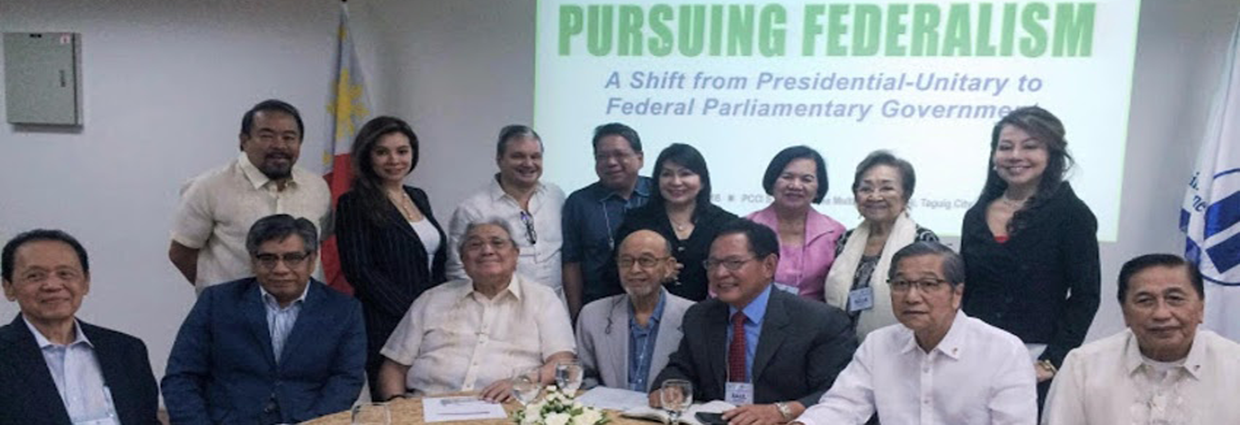
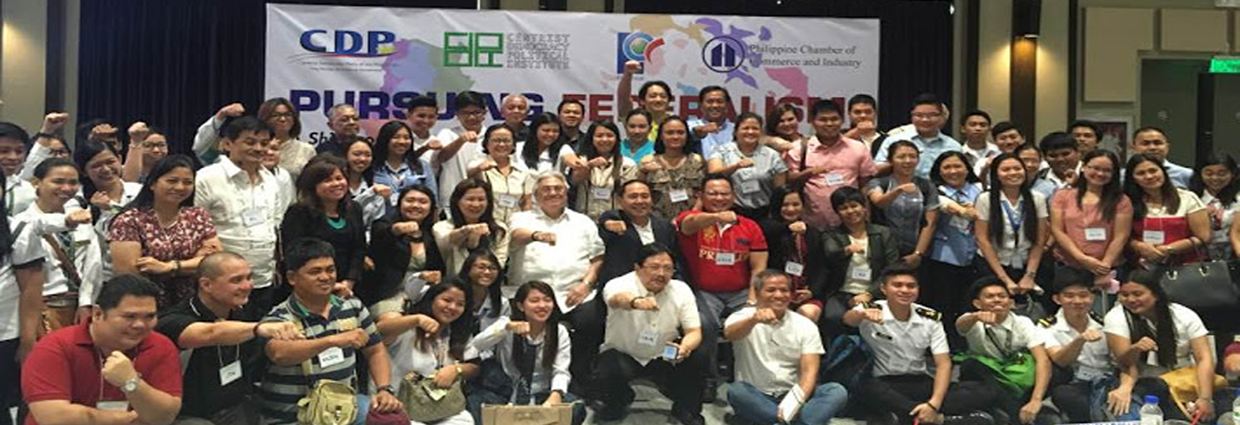
My articles and pronouncements over the years have always reflected my public position on the type of government we Centrist Democrats have advocated passionately for decades: to shift our government from the unitary-presidential form to a parliamentary-federal structure.
These ponderings are prompted by two related occasions this month, the Harvard-KSG Alumni celebrating their 33rd year in the Philippines; and the other, the prodding of an alumni stalwart, Willy Villarama, who sent me video clips of Singapore's founder Lee Kuan Yew's (LKY) pronouncements about how he has elevated Singapore from a backward state — less developed than the Philippines — to emerge among the best economies in Southeast Asia in four decades.
LKY and parliamentary govt
Contemporary accounts attribute Singapore's rise to what LKY himself declared was his basic credo: good governance! In the 31 years as prime minister under a parliamentary system, this is what LKY, and his government delivered. Primarily, anti-corruption policies were instituted, where government dealings are transparent and aboveboard, and the rule of law reigns supreme. A system of meritocracy was put in place governing the choice of people taken into the bureaucracy where bureaucrats are hired and promoted regardless of race, language, or religion. This resulted in the establishment of a superb civil service comparable to that of the United Kingdom's original.
All these are underpinned by political pragmatism where the three cultural components of Singapore's society — Malays, Chinese and Indians — have a fair share of responsibilities and duties and fruits of good governance. He disdained short-term populist policies designed to serve only a segment of Singapore society, opting for long-term socioeconomic planning. His government embraced globalized trade transforming the island of Singapore into a developed country, with high income and sustainably high growth. Though influenced by Western democratic concepts, he was an advocate of Asian values where his three decades of leadership were described as authoritarian with some elements of freedom allowed within some democratic space. His champions characterized his regime as a hybrid or a guided democracy. His critics, mostly advocates of westernized values, censured him for "...curtailing press freedoms, imposing narrow limits on public protests, restricting labor movements from industrial or strike action through anti-union legislation and co-option." (Wikipedia)
Harvard-KSG
Perhaps Willy Villarama was giving a not-so-subtle hint that somehow, the KSG alumni must look up to LKY as a model for the Harvard alumni community to emulate. There is, in fact, a certain logic to this as LKY is an alumnus of some of the best universities; London School of Economics, Cambridge (Fitzwilliam College) and the National University of Singapore — reputedly the Harvard of Asia. But the comparison ends here. I don't assert that one needs to be an alumnus of these venerable institutions or similar ones to be a great political leader.
No educational institution guarantees a pathway to the highest leadership of any country, not Harvard, not Yale or for that matter our own UP, Ateneo, La Salle or UST — just a few of many great educational institutions in the Philippines. What a great university guarantees is to simply provide a venue and an atmosphere where undergraduate students are allowed to get a glimpse of their full potential in whatever profession they so choose. It is unfortunate that this system for many generations has imprinted in the minds of our people that university education is a sine qua non for advancement, top employment, and the highest echelons for all professions. This mindset has resulted in an elitist view of higher education.
Thus, graduates of these local universities seek higher learning in postgraduate fellowships abroad not so much to gain more knowledge — which could be incremental and marginal — but to acquire a patina of prestige conferred by a diploma as evidence of an expensive training from venerable institutions. Harvard's post-graduate professional schools, undoubtedly the premier academic institution with world-class credentials, are coveted. Kennedy School (HKSG), Business (HBS), Law (HLS), Medicine (HMS) and its other professional schools, are Harvard's legitimate offspring; sharing and dispensing a fragile modicum of its reputation for excellence, that Harvard so painstakingly accumulated over the centuries as a great institution. And a synergy is thus created as these Harvard disciples who have been recruited already competent, accomplished, skilled and overqualified, are stamped with its aura, sent forth to the world and called Harvard's own. Thus, this symbiosis could enhance the reputation of both. But Harvard does not guarantee good performance. They just have to prove themselves better.
My final wish, therefore, having thus imbibed from this great institution myself, is for my colleagues in the KSG and the Harvard community, especially those currently in sensitive and responsible positions in government and in the private sector, to explore alternatives to this dysfunctional system we've had for generations. On this, we Harvard people should initiate this conversation and help shape the debate.
Happy New Year!
US justice department: The son of God — a rapist!

THESE are serious accusations. And it is a measure of the inadequacy of our justice system that it has taken a foreign country to indict one of the Philippines' most powerful personalities, described as a shrewd businessman, an influential radio and TV station owner, a feared political kingmaker and to top it all, head of a religious sect who styles himself as the "appointed son of God" (ASOG).
Mincing no words, the United States Department of Treasury said it was acting "...to promote accountability for human rights abusers and corrupt actors across the world. For more than a decade, Apollo Carreon Quiboloy engaged in serious human rights abuse, including a pattern of systemic and pervasive rape of girls as young as 11 years old, as well as other physical abuse. Quiboloy also subjected pastorals and other KOJC members to other forms of physical abuse... Quiboloy was on the Federal Bureau of Investigation's most wanted list for sex trafficking, fraud and coercion, bulk cash smuggling, and more."
America is seizing Quiboloy's assets in places where they can. (Jean Mangaluz, Inquirer.net, Dec. 10, 2022.) In short, America has gone beyond its shores to go after miscreants, those who broke its laws establishing the preeminence of the secular over the spiritual, the temporal over religion; and in the process risking the fury of the "appointed son of God." For isn't it a "divine revelation" when Quiboloy is claimed by Quiboloy himself to be the blessed one? And he has declared that those who mocked him as the Sanhedrin and the high priests did 2,000 years ago will face the rage of his father? Did he not stop the earthquake in the Philippines three years ago? America, beware!
Televangelism
Quiboloy's profession is televangelism or the use of media to communicate his brand of religious belief. There is nothing wrong with this per se. In the 1930s, Fr. Fulton Sheen, an American Jesuit priest, practically pioneered broadcast preaching, spreading God's gospel on his program, "The Catholic Hour," on radio. With the advent of television, he was the first Catholic religious personality to use this medium in his syndicated TV presentations, "Life is Worth Living." Later consecrated a bishop, he was on his way to being beatified by Pope Benedict 16th in 2012.
Upon the deregulation of media in America, access and ownership of TV networks and cable TV became open for anyone who could afford it. And with a large Christian Protestant population, American churches of several denominations started using this media. These spawned all types of ministries from regular pastors of local churches to charismatic religious personalities with their own places of worship — now called megachurches or TV studios — from whence their broadcast emanated.
Christianity started sending missionaries from the third century to many lands to save souls; and from the early Middle Ages, to conquer the natives using religion and the sword as tools for colonization.
First considered complementary to missionaries sent abroad in the 19th century, radio and TV enabled the Christian West to reach large numbers at relatively low cost even in those countries where preaching and missionaries were banned — Asia and the Middle East.
Early legitimate televangelists were backed by big churches. Fulton Sheen by the large Catholic community; Oral Roberts of the Pentecostal Holiness and the Methodists churches; Pat Robertson of the Baptist Church; and the internationally famous Southern Baptist minister, Billy Graham, perhaps "...among the most influential Christian leaders of the 20th century." Graham, who repudiated racial segregation, famously invited Martin Luther King jr. to preach jointly in New York.
Capitalism and religion
But in the true fashion of capitalism, its values began to permeate the practice of religion itself, resulting in the proliferation of all sorts of Christian religious denominations, sects and cults competing against each other not necessarily for the conversion of souls but for lucre.
Overarched by America's convoluted tax system, these televangelists became masters at milking their congregations, perverting religious broadcasting using laws and rules exempting churches from taxes. Religion became a lucrative business!
The likes of Jim and Tammy Faye Bakker who headed the "Praise the Lord (PTL) Club" under their Trinity Broadcasting Network gained notoriety accumulating millions of unaudited funds diverting amounts to themselves, even building a Christian themed park, Heritage USA, which eventually went bankrupt. Jim was convicted of several crimes and sentenced to 45 years in prison (serving only 5 years).
One of the most notorious was Jimmy Swaggart, a Pentecostal pastor ordained by the Assemblies of God; he founded a small church, the Family Worship Center and parlayed this into a multi-million megachurch. He lost his church eventually when he was embroiled in a sex scandal with a prostitute.
Gaya-gaya in da Pilipins
The perversion of religion through mass media became apparent with the popularity of American televangelists. We have our own televangelists in the Philippines who may have accumulated riches too. But whether they are legitimate or not is for our justice system to prove.
The US' formal accusation specifically declared that, among other things, the "Appointed Son of God" is a rapist. These are fighting words. Former Justice secretary Menardo "Boy" Guevarra, the current solicitor general, issued a response that is at best a lame one. "If the evidence further shows that some acts other than those covered by the US indictment have been committed here, then that's a cue to conduct a separate domestic investigation."
The Justice department has admitted that a complaint of rape, child abuse and human trafficking was filed against Quiboloy in Davao City last year, but that this was dismissed. He noted that the dismissal is "now on appeal with the DoJ."
Justice Secretary Crispin "Boying" Remulla has no response nor started any initiative to do any investigation except to aver that the extradition of televangelist Apollo Quiboloy, if requested by the United States government, may take time.
Treating Quiboloy with kid gloves is understandable as in the city where his cult sprouted, he is virtually untouchable, having been the spiritual adviser of his co-Davaoeño, former president Duterte. And herein lies the greatest abnormality — not so much ASOG's amassing of wealth but his accumulation of political clout at its rawest, controlling a sizable amount of command votes.
This fact is significant as over the years he has managed to project an image of a political kingmaker. And this symbiosis between the traditional politicians and the sect leader — charlatans all — have taken a life of its own. True or not, it doesn't matter, as every election time those who seek the highest office must first seek the blessing of the appointed one. So, they form a bee-line to his heavenly abode in Barrio Tamayong for the ASOG to lay his holy hands upon their heads. All of them — winners and losers. And this feeds on itself. This in essence is political power. How he manages to pick the winner is perhaps a mystery.
Quiboloy deserves his day in court — but not in his heavenly domain. This is now in the hands of BBM. Will he risk the wrath of the "appointed son of God"? Or will he let justice run its course?
Enrile pushes scrapping of 1987 Constitution

CHIEF Presidential Legal Counsel Juan Ponce Enrile on Wednesday, September 21, said he favors the scrapping of the 1987 Constitution and charter change at this time, but only through a constitutional assembly.
"Let's change the Constitution, but let's do it through a constitutional assembly," said Enrile during the continuation of the hybrid hearing of the Senate Constitutional Amendments and Revision of Codes chaired by Sen. Robinhood "Robin" Padilla on the Review and Study of the 1987 Constitution.
"Charter change is imperative, it's needed now. But we do not need a Con-con (Constitutional Commission), that would only cost a lot of money. Congress can do it. Why do we have to hold an election and pay the salaries of people who may not necessarily understand the problems of the nation because they have not experienced these problems," he explained.
While acknowledging that constitutional experts should be consulted, Enrile said he prefers to have public officials elected by the people, "who have to live with the present Constitution and already have an intimate grasp of problems facing the nation" to amend the fundamental law.
He said that he personally favors maintaining the presidential form of government, but giving the elected President of the Republic a longer term of office that is to be determined by a constitutional assembly.
"We need to amend the Charter because it is a source of our problems as a nation, and it retards our progress. As long as we have the present Constitution we will remain where we are," he stressed.
Asked as to how Charter change could help curb corruption, Enrile replied: "You cannot change the character of the Filipino through Charter change, but you can open up the country to development. The problem of corruption is a question of law enforcement. If you jail the corrupt and seize their ill-gotten wealth, the problem will stop."
According to Enrile, some of the provisions of the 1987 Constitution hinder the nation's progress. The Constitution actually favors only the rich. It allows them to invest as much as 60 percent in mining, agriculture, transportation, and so on. The rich make lots of money here, but they bring the profits elsewhere.
"We should have an investment policy that will protect not only the rich but also the poor. We can control the foreigners but not the rich Filipinos who control our politics, the judiciary, the executive branch, and even the police and the military. While the present setup works to their advantage, the nation suffers," Enrile added.
Told that in every administration, there's a call for Charter change, Enrile said: "There's a need for it. Many oppose it for their own personal interests, not the national or public interest. The 1987 Constitution should be amended so that we can have unity in our society. There's too much debate."
Harvard Bureaucrats Ball

LAST December 15, the Harvard Kennedy School Alumni Association of the Philippines (HKSAAP) celebrated its 33 years in the country with a gala event, the Bureaucrats Ball, a tradition started at the Harvard Cambridge campus and replicated in the Philippines only for the second time. The gathering is a Harvard family affair where in the words of its hardworking executive director Jose Buenaflor Jimenez 3rd, "Although divided in political convictions and affiliations, its members stand united in the pursuit of better living, [through] exemplary leadership, honor, and always with utmost integrity."
Harvard University over the years has had many of its graduates recruited to various Philippine administrations. In the best tradition of academic and professional excellence, the Kennedy School of Government (KSG) has had its share of these men and women occupying the political spectrum. The classic "clash of ideas, the thesis and antithesis resulting in a synthesis" has been the hallmark of the philosophy behind the institution's founding. The Harvard-Kennedy community is diverse as the citizenry it serves.
At the ball, Migrant Workers Secretary Susan V. Ople (MC/MPA '99) was the guest of honor. She recounted in her talk, "Tale of Optimism Over Adversity," her life at Harvard with classmates Arlene Donaire, Amina Rasul Bernardo, Corina Unson and Jesse Robredo (†). Arlene, an artist/photographer, encapsulated her message with a quote to remember: "To be effective as a leader, you need to be as authentic and as free as you can be."
The affair was also an occasion by the outgoing Harvard alumni board headed by the indefatigable Raffy Alunan 3rd (MC/MPA '97) to award the Veritas Medal recognizing the successful run of our Harvard colleagues in government, led by current BCDA Chairman Delfin Lorenzana, UP President Angelo Jimenez, Batangas Vice Gov. Mark Leviste, and various undersecretaries: Gloria Jumamil-Mercado of DepEd, Anneli Lontoc and Cesar Chaves of DoTr, Maria Antholette Allones of DMW, and those working at attached agencies. Of note was the recognition of the founding fathers of the association and its subsequent permutations: from the original '89 KSGALPHA to the 1997 KSGAAP Foundation to the 2012 HKSAAP. The Veritas Medal was our chest-thumping way of conveying to our own that we are proud of their services to the government and the Filipino. (Full list of awardees in our FB and Viber group.)
Genesis
In Jimenez's briefing paper, the Harvard KSG was the latest of the 10 graduate and professional schools, founded only in 1936, with the oldest, Harvard College itself established 300 years earlier in 1636. The first Filipino graduate on record was Angel Nakpil (MPA '41). A prominent grad who had a stint in the cabinet was Onofre Corpuz (MPA '53) who served in various capacities as the secretary and minister of education, president of the University of the Philippines, and first chairman of the Career Executive Service Board in the late 1960s. Not until the 1980s were the Kennedy School graduates recognized in government.
"It was in 1989 when the association would begin to take a more formal structure. After completing the Mid-Career, Master in Public Administration program in 1989, Lito Monico Lorenzana, with classmates Primo Arambulo, Alejandro Flores Jr. and Christopher Gomez, initiated the creation of the alumni community," wrote John Jimenez.
An illustrious finishing school
In his welcome remarks at the Bureaucrats Ball, Lito Monico Lorenzana (MC/MPA '89), with a tinge of nostalgia spiced with humor (excerpts reprinted here), said the idea of organizing the alumni of the KSG in the Philippines was not at first coated with an aura of gravity — in the genre of Harvard alums "changing the world":
"We were mulling the idea of broadcasting the bragging rights we earned with our Harvard diplomas (but tastefully and nonchalantly), hinting that we have gone successfully through a year of (with tongue in cheek) the world's renowned finishing school. Harvard has also been arrogantly proclaiming that the institution imparted a fine patina of excellence on their graduates — Harvard men and women (and gays, to be politically correct). That there's just us! Babes Flores and I took the opposite view. We believe we were already distinguished and excellent, ahead of the curve even before we passed through the gates of Harvard. In fact, we made Harvard great!
"Thus, this HKS group's original purpose as envisioned by the four '89 Mason Fellows of the Kennedy School was nothing grand or formal or earth-shaking as changing the world, making it a better place, making a big difference ... etc... etc.'
"BTW, don't get me wrong — all of these are noteworthy and good. But more importantly, we needed a vehicle back in the Philippines to show off our elegant Burberry double-breasted Blue Blazers bought at a huge discount at Filene's Basement in Boston." (Full text of the speech by this columnist in our FB and Viber group.)
Role of Harvard graduates
As in any dynamic organization, the KSG reinvents itself from time to time. Thus, in 1997 it transformed itself into a foundation establishing a global network with Chato Calderon's (MC/MPA '88) group of multilateral consultants and cabinet members at the forefront. Its stated mission was elevated to a more grandiose declaration coated appropriately in bureaucratese "...to promote the ideals of public service, leadership, honor and integrity, inculcated by the experience and education of the school, to organize and provide assistance for research studies, conferences, and dialogues, relating to the development of policy issues, and alternatives, with special focus on public policy issues, in the context of Philippine development."
The intervening years saw the organization stamp its mark mostly on government with members recruited to the cabinet and sub-cabinet levels, the military and the bureaucracy of six administrations.
In another metamorphosis occurring in 2012, one of these Cabinet members, Raffy Alunan with Tony Abad, registered with SEC perhaps the final version of the Harvard-Kennedy School Alumni Association of the Philippines — HKSAAP. But for a quirk of the pandemic years, the board extended its term that ended appropriately with the election of the incoming one at the Bureaucrats Ball. The association's efforts over the years are "always work in progress," and its success or failure is a mostly subjective gauge on ideas and policies emanating from the collective minds of the members harnessed effectively well by its leadership; injected into the government mainstream, applied for the country's benefit. The challenge now for the incoming board is to do better than the last.
With a revolving door between the HKSAAP and government, there is a danger that the principles behind which the former was founded may be overlooked. Its leadership and ultimately its membership may have to remind themselves that they must at all times adhere to the "Veritas" of its existence — nothing more than the delivery of good governance to its clientele — the Filipino.
To remind us all, I reiterate my counsel years back when I assumed the first presidency of the KSG: "You are good, if you can uplift the Filipino from their current condition. But you are greater, if you bring them to a condition beyond where they need not be uplifted."
That is the role the HKSAAP must carve for itself.
Maharlika: Consolidating 'kurakot' into one fund

SO, what's the fuss over this Maharlika Sovereign Wealth Fund that people who know nothing about investments are bitching about? As staunch apologist Secretary Ben Diokno declared: Maraming ... nagko-comment na hindi pa nababasa ata 'yung bill eh, so out of ignorance ..." In short, read the bill before you whine!
Dismiss the detail that the fund is named after Maharlika, the ostensible guerrilla group led by war hero Ferdinand E. Marcos Sr. that the US Army has debunked, and the National Historical Commission has said was "fraught with myths, factual inconsistencies and lies"!
Sen. Risa Hontiveros had to remind everyone: "I get heebie-jeebies whenever I hear the word 'maharlika.' It's part of the legacy of the martial law dictatorship, the mythmaking, to really milk it." Although it is a non sequitur, she could be right, considering this bill is proposed in Congress by Sandro and Martin, son and cousin, respectively, of BBM.
After six months in the political doldrums, and after the "kapalpakan" of his ex-executive secretary and accusations of a lazy president causing countless unfilled positions in the Cabinet and the bureaucracy, reportedly awaiting a vetting committee of one; he has caused them to file "... a bill seeking to create the fund — one of his administration's boldest economic plans to date." Bold! My eye!
Opposition to the fund has since swollen with some critics warning it could wind up as the motherload of all "kurakot schemes" eclipsing the NBN-ZTE broadband, the Napoles pork-barrel kickback scam, the Disbursement Acceleration Program (DAP), the Pharmally pandemic scams — combined. Admittedly, stretching a little bit too far with this comparison, one can't blame the Filipino for being so jaded on new initiatives from any administration involving congressmen and money — an oxymoron! But first, let's put things in proper perspective.
Sovereign wealth fund
This is a state-owned fund that is used to invest mostly globally in a variety of asset classes such as stocks, bonds, real estate, private equity or even in exotics as in metals, objets d'art, hedge funds, bitcoins, etc. Its main characteristic is using excess funds for maximizing long-term returns and thus not funds used by governments or their central banks for short-term "currency stabilization" and liquidity management. More importantly, in our case, these investments are intended to enhance the wealth of all Filipinos, particularly for the next generations.
There are also funds which are privately run with even bigger assets under management (AUM) than the whole GDP of the Philippines. The Blackstone Group has $881 billion in AUM.
The International Monetary Fund monitoring the 100 or so SWFs has listed some of those successful ones. Temasek, headquartered in Singapore, is the savings or generational investment fund that has the future of Singapore and its people in mind. Its long-term sustainable returns have been phenomenal since its establishment in 1974, running at 14 percent compounded annually.
One SWF of note is Norway's ($1.136 trillion) established in 1969 after the country discovered oil in the North Sea. Safeguarding the country's economic future with its excess funds, it has investments in 9,300 companies globally. Yet its investment lost $174 billion in the first half of 2022, principally due to inflation, the war in Ukraine and the fear of global recessions. But with enormous assets, this loss is just a mosquito bite.
Notorious SWF
But there are also SWFs that lost big not so much because of the exigencies of the world economy but because of the corruption of those that ran the funds. Foremost of these is the 1 Malaysia Development Bhd (1MDB) of Malaysia, described as one of the world's greatest financial scandals involving corruption, bribery and money laundering conspiracy in which the fund was systematically embezzled, with assets diverted globally by the perpetrators of the scheme. Reportedly Malaysia's then-prime minister Najib Razak had channeled over RM2.67 billion (approximately $700 million) into his personal bank accounts.
Another horror story closer to home is the Brunei Investment Agency (BIA). "This SWF was to accumulate savings for future generations, as energy resources are considered depleting assets that shrink to zero over time" (1MDB brochure). Founded in 1983 ($71 billion), the BIA was run by Prince Jefri, finance minister and chairman of the fund from 1986 to 1997. After an external audit, he was found to have embezzled $14.8 billion. The prince was exiled for a certain period from Brunei by his brother Sultan Bolkiah for losses/anomalies and the dissipation of BIA's assets.
GSIS-SSS
At present the Philippines already has investment funds — not strictly sovereign — as "sovereign" has a special global connotation. What is controversial in the shaping of the law is the diversion of assets of the GSIS and the SSS to the Maharlika. Congress in creating the Maharlika will siphon off P125 billion from GSIS and P50 billion from SSS (a total of roughly $3 billion).
These are contributions and savings of government and private sector employees, respectively — with counterparts from their employers. These institutions have for years been run by their own boards with their funds invested and returns accruing to the members. SWF is just a duplication. But as in anything that government handles, there are critical flaws.
Years ago, then GSIS president Winston Garcia filed plunder charges against four GSIS officials before the Office of the Ombudsman for their alleged involvement in a housing loan scam that defrauded the GSIS of P413 million. This was part of a large real estate investment portfolio of GSIS invested locally. Such funds "... has apparently stirred up a hornet's nest of racketeers who want to exploit the GSIS as their milking cow for as long as possible." One can't blame Hontiveros therefore for being scared, declaring in a television interview "... and speaking of plunder... they are saying that the money of the members of SSS, GSIS, Pag-IBIG will be mobilized for this sovereign wealth fund."
Transparency and safeguards
Strictly speaking, the Philippines doesn't really have excess funds to create our own SWF, in the manner of Brunei and Norway which set up theirs from their oil/gas windfall and surpluses. The Philippines' track record in running pension funds leaves much to be desired, let alone a global SWF.
In the Philippines, when you have Congress and administration allies painstakingly concocting ways to source funds for another dubious venture — which Maharlika is — cuidado! This is another monumental scam in the making! I'd rather listen to the better Marcos, Imee, expressing fears that the proposed Philippine sovereign wealth fund might suffer the same fate as Malaysia's 1MDB, which was hounded by corruption issues.
With graft and corruption so endemic in our country, ask any Filipino in the street if he really is assured of the pronouncements of our political leaders like Zubiri and Gatchalian declaring "... the need for full transparency and efficient utilization of taxpayers' money should the government push for its (Maharlika's) creation... corruption can be addressed by safeguards. An oversight committee in the Senate can also be created to ensure that the funds invested are properly monitored."
Once you have an oversight committee over the application of funds, the Philippine experience shows that over time, this becomes highly politicized and their dirty little fingers groping all over the place.
Maharlika is another scheme in consolidating 'kurakot' into one fund.
And God/Allah help us!
Think tank: LGUs not yet ready for devolution

MANIA, Philippines — A local governance think-tank urges the administration of President Ferdinand Marcos Jr. to heed the request of the local government units (LGUs) to move the implementation of full devolution to 2027, instead of 2024, the target period set by his predecessor Rodrigo Duterte.
Full devolution, or the transfer of key national government functions to the LGUs, is in compliance with the Mandanas-Garcia ruling of the Supreme Court, which gave bigger budgets to provinces and cities, but at the same time stipulated that the task of implementing programs and projects otherwise done by agencies of the national government be transferred to mayors and governors.
The high tribunal in 2018 granted the petitions of Batangas Gov. Hermilando Mandanas and the late former Bataan Gov. Enrique Garcia Jr. that the LGUs’ internal revenue allotment or IRA (now called the national tax allotment or NTA) should come from 40 percent of “all” national taxes — not only from the collections of the Bureau of Internal Revenue which had been appropriated in the past but also from the Bureau of Customs’ collections of import duties and other taxes.
Under the 2023 budget, for instance, ₱820.3-billion in NTA is allocated together with ₱28.9 billion under the Local Government Support Fund (LGSF) to empower LGUs in delivering the devolved services. In 2021, this amounted to only ₱695.49 billion.
Duterte signed Executive Order No. 138 in June 2021 directing the national government to “devolve” or transfer to LGUs the implementation of formerly national government functions and give LGUs a three-year transition period until 2024.
The order cited Section 17 of Republic Act No. 7160, or the Local Government Code of 1991, allowing the transfer to LGUs of local infrastructure (for education, irrigation, and trade), agriculture and natural resource management, environmental services, telecommunications, peace and order, social welfare, transportation, tourism, and housing services functions.
‘Risk of a failure’
However, the Local Government Development Institute (LGDI) agreed with LGUs and other experts on the need to extend the transition period under EO 138 to six years, or to 2027, for a more gradual transfer of programs.
“Based on our interactions with LGUs across the country, many are clearly not ready for full devolution. The risk of a failure is high. We should learn from our experience in the ’90s during the first phase of the devolution which was very challenging. Therefore, the appropriate interventions have to be given to the LGUs,” Jonathan Malaya, executive director of LGDI and former undersecretary of the Department of the Interior and Local Government (DILG), said in a statement.
“It is critical that LGUs are actually prepared technically and financially to take on the additional functions that come with full devolution. If the LGUs are not ready to deliver the services given before by the national government, it may result in delayed or deficient implementation which is to the detriment of public service,” he warned.
Malaya called on the national government to fast-track the implementation of capacity development programs to prepare all LGUs for the devolution transition.
He said the DILG’s Local Government Academy (LGA) could take the lead in capacity development interventions for the local governments and introduce the appropriate mechanisms to ensure efficient use of government resources.
Given the many capacity development interventions by the Department of Budget and Management, the National Economic and Development Authority, the Department of Finance, the Development Academy of the Philippines, and third-party service providers for the LGUs, the LGA should harmonize all these efforts, Malaya said.
All LGUs and the national government agencies concerned should also prepare their respective devolution transition plans to ensure the smooth implementation of full devolution.
Fund misalignment
According to Malaya, the government should seriously consider an earlier call by House Assistant Majority Leader Richard Gomez for a one-to-one correspondence between the increased NTA to the cost of devolved programs to LGUs.
The Leyte lawmaker had even urged the President to repeal EO 138, citing the lack of a clear plan and the misalignment in the source of funding.
“I am appealing to President Marcos to nullify EO 138 as Congress and the Executive thresh out the various issues that have cropped up related to the implementation of the full devolution of services,” he said, adding: “Let’s put everything in order first before discussing full devolution again.”
“Most glaring of these issues is the fact there is simply no peso-for-peso correspondence between the added NTA and the added funds required to finance full devolution. In many cases, the added funds required to finance fully devolved programs [are] more than the additional NTA.
This misalignment in sources and uses of funds at the LGU level emanates from a systemic issue that can be traced from how NTAs are derived per LGU as mandated by RA 7160,” he noted.
The House committee on local government has initiated an inquiry stemming from Gomez’s House Resolution 599, which maintained that the calculation of the NTA of local governments were not aligned with the costing of devolved functions under the Local Government Code of the Philippines and EO 138.
Not all LGUs capable
In the Senate, Sen. JV Ejercito on Sunday agreed that many LGUs might not be able to take on the devolved functions from the national government within the three-year transition period.
“I would highly recommend [an] extension of the transition period,” the chair of the Senate local government committee told the INQUIRER.
“Cities and first-class municipalities will probably have the capacity, but second to fifth-class municipalities might not have the capacity yet to implement some of the devolved functions like health, education, and agricultural programs,” the senator said.
He said he had discussed with Interior Secretary Benhur Abalos and Valenzuela City Rep. Rex Gatchalian, Ejercito’s counterpart in the House of Representatives, the creation of a technical working group to look into the effect of the Supreme Court’s Mandanas ruling.
BBM-Xi Jinping-Trump

TWO occurrences in China and America within the last quarter of 2022 could impact on world political events. This column's concerns revolve around how the new administration of President Ferdinand Marcos Jr. reacts to them. The first is the anointing of President Xi Jinping as China's virtual dictator. China has removed the two-term limit on the presidency, effectively allowing Xi to rule beyond his original term that should have ended in 2027. There have only been two people in the Chinese Communist Party (CCP) prior to Xi who have been similarly privileged — Mao Zedong, the founder of modern socialist and communist China, and Deng Xiaoping, the political reformer who guided China with baby steps toward a market economy.
But China today is undergoing an upheaval of sorts and the country's profile is changing drastically. With tight controls by the Communist Party on its people and the press, we seldom have the unvarnished truth coming out from China. But with the internet defying the airwaves, snippets filter out that Xi Jinping's harsh 2022 pandemic zero-Covid lockdown policy has resulted in defiant public protests in major cities, from Shanghai to Sichuan to Nanjing and even Beijing.
Protests in China
People kept locked in their homes for months on end have started to get out to the streets to protest these insufferable conditions. The trigger to these protests was a fire in an apartment building in the city of Urumqi in the northwest where 10 people died. They couldn't escape because of the lockdown, local officials had sealed the doors of the apartments from the outside.
But the tenor of these protests has dangerously gone beyond the harsh lockdown conditions and has interjected a host of other social and political grievances — including mutterings against Xi Jinping's personal leadership. Since the Tiananmen Square upheaval in 1989, the government has learned to develop the technology to counter these mass gatherings, quelling mostly localized protests. With the Tiananmen protests, however, the elite-driven movement of Beijing-centered university-based students and intellectuals did not exactly resonate with the wider citizens.
It's different this time. The demonstrations have simultaneously and spontaneously erupted in many places, and the demands threaten to spill over beyond Covid toward the legitimacy of the new regime itself; a dangerous development as the dictatorship's response will be shaped by the dominant issues. So far, options are available to simply relax zero-Covid restrictions as a relief valve, assuaging public demonstrations of defiance. But then again, this could be misconstrued as a sign of weakness.
With the instruments of state repression at his command, it is unlikely that these developments will weaken Xi's hold on the levers of power, but it will embarrass him no end in the international stage, adding to the world's political volatility.
US Republican Party
The second event was last month's midterm US election that flipped the lower house to the Republicans. They were predicting a "red wave" at the polls that did not materialize. This was purportedly the worst GOP midterm election performance and all because of a political anchor that drags the party down — Donald Trump. Those that the former president supported in the GOP primaries lost miserably in the general elections. They could have won a bigger majority in the House and recaptured the Senate.
But a threat looms on the horizon. Trump has declared his intention to run again in 2024 putting the GOP into a quandary as to either continue to align with this polarizing still influential former president or to look for new blood within their leadership. Trump can throw the 2023 Republican primaries into a paroxysm of political realignments. There is the Florida governor DeSantis, a Harvard and Yale-educated lawyer whose star is on the ascendant. Former vice president Mike Pence will have a hard time shedding his image as Trump's stooge. Others mentioned are the maverick Liz Cheney who voted to impeach Trump and turned pariah by her party, Trump's former secretary of state Mike Pompeo, and a host of GOP wannabees. But these potential rivals never had the charisma nor the tenacious loyalty of almost a third of the fringe Republicans that Hillary Clinton once described as a "basket of deplorables." These are the 2020 election deniers continuing to propagate the lie that Biden didn't win the presidency. They could push the Donald over the lackluster GOP rivals precipitating a rematch in 2024.
US Democratic Party
On the other hand, the Democrats are likewise in a predicament as Biden, now seen as a politically weak and physically spent force, seeks re-election. So far, no strong Democratic candidate is in sight to contest Biden in the primaries. Kamala Harris as a substitute is a remote possibility — a Black woman acceptable for the vice presidency perhaps as a token but not for the presidency — from a still racist American electorate.
There are scenarios and there are scenarios but considering the state of the US' convoluted politics, the intriguing one is the return of Trump to the US presidency and its implications for the world, particularly for Southeast Asia and the Philippines.
Is BBM his own man?
A corollary to the two events described above are the implications for the Philippines with new helmsman, BBM. President Duterte went out of the political stage in style — sent off by the Filipinos with the highest popularity and trust rating ever. No doubt his foreign policy initiatives gained traction. His pivot away from America toward China has warmed the cockles of Xi Jinping, even announcing earlier in his presidency in 2018, "I simply love Xi Jinping. He understands my problem and is willing to help, so I would say thank you China." This amid the polemics surrounding the arbitral tribunal ruling on the South China Sea (West Philippine Sea), rejecting China's nine-dash line. Such bromance and declaration of endearment were to provide dividends from China with Xi's promises to fund his Build, Build, Build program. But on examination once the Deegong left office, it turned out to be all just that, promises — mostly unfulfilled. We've been had!
And now, it's BBM's turn, armed with an exceedingly high popularity and trust rating as he enters office. With a possible return of Trump, and the ascendancy of Xi Jinping, we are confronted with an eerie sense of déjà vu. It was during Trump's watch that Xi caused territorial disputes involving conflicting island and maritime claims.
Trump's inability to confront Chinese aggression during his term has impacted even our country's foreign policy which started with Duterte's pivot away from America to a neutrality that really favored China. And now BBM is mouthing a similar mantra with his foreign policy of "friends to all, enemies to none," an asinine, childish declaration descriptive of our inutility; while advocating that "...international rules-based order and the rule of law ... in the maritime sector;" and unable to do anything while Chinese coast guards drive away Filipino fisherfolk from our traditional fishing grounds.
But we are concerned with the here and now. Duterte is out, and now Junior is on the hot seat. Can he hack it?
Lawmaker wants charter change through constitutional convention

MANILA, Philippines — The House of Representatives has resurrected moves to change the 1987 Constitution, proposing to do so through the formation of a constitutional convention.
House Joint Resolution No. 12, introduced by Cagayan de Oro City Rep. Rufus Rodriguez, cited the need to revisit the economic provisions of the Constitution “so that the Philippines may become globally competitive and attuned with the changing times.”
“Such constitutional reform has been identified by reputable business and economic groups as one of the key policy instruments that needs to (be) implemented, and is now long overdue,” Rodriguez said, adding that “political reforms may now be required to be incorporated in our Constitution.”
The resolution was referred to the House Committee on Constitutional Amendments.
Previous attempts to alter the Constitution failed to progress following allegations that these were actually intended to prolong the stay of incumbent politicians in their posts.
In a bid to avoid such opposition to charter change, Rodriguez said “the assumption of the new government counteracts any suspicion that the clamor for constitutional reform promotes vested interests and the personal ambitions of elective officials in the guise of constitutional amendments.”
The proposed House joint resolution also noted that “calling for a constitutional convention to propose amendments to the Constitution to be composed of elected delegates from all regions of the country would be the most democratic and least divisive among the three modes of amending the Constitution.”
Election in 2023
Should the joint resolution be approved by the Senate and the House of Representatives with a vote of two-thirds of their members, the election of delegates from each legislative district to the constitutional convention would be set in October 2023, or simultaneously with the rescheduled barangay polls.
The Commission on Elections (Comelec) chair would be tasked to initially take charge of all arrangements for convening the constitutional convention, which would meet at the session hall of the House of Representatives on Jan. 8, 2024, to be presided jointly by the Senate President and the House Speaker until a presiding officer is elected among the delegates.
Delegates will have a term of office of six months, or until June 30, 2024, and the constitutional convention will be mandated to submit its report to the president, Congress, and Comelec within 30 days from the completion of the consolidated charter amendments or revisions.
Recent attempt
“The amendments to, or revision of, the Constitution proposed by the convention shall be valid when ratified by a majority of the votes cast in a plebiscite which shall be held not earlier than 60 days nor later than 90 days after the submission of the convention reports,” according to the proposed resolution.
The most recent attempt of the House to amend the 1987 Constitution was in early 2021, but this was rejected by several senators, saying the revisions sought by the purported “economic Charter change” were already being addressed by several proposed legislation.
Several senators also questioned the propriety of discussing amendments to the Constitution while the country remained gripped by the COVID-19 pandemic.
Categories
Archives
Comments
-
 This is really interesting, You're a very skilled blogger. I've…
Written by Merrill
on Thursday, 24 March 2016 12:35
Incompetence Kills
(LML Polettiques)
This is really interesting, You're a very skilled blogger. I've…
Written by Merrill
on Thursday, 24 March 2016 12:35
Incompetence Kills
(LML Polettiques)

Newsletter Subscription
PARTNERS:


Contact Us
+63 (02) 470-9076 Pasig
F. Torres Street Corner Jacinto Extension,
Davao City, 8000 Philippines
Jr. Road Ortigas Center, Pasig City
